

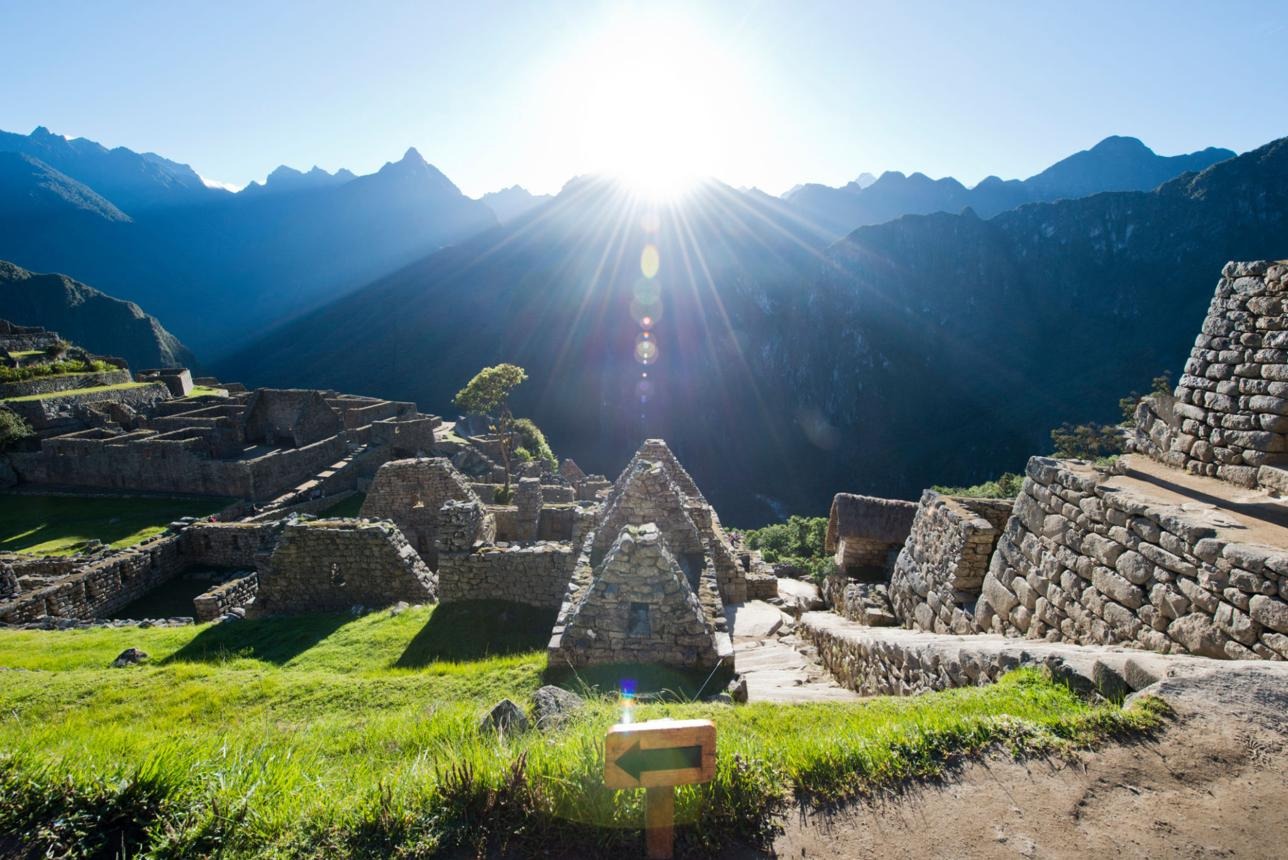
Most people picture the Sun Gate as a dramatic stone archway with Machu Picchu framed perfectly below it. That’s not quite it. Inti Punku, as it’s called locally, is a narrow gap between two walls, part of what’s left of a small checkpoint the Incas used to control who entered the citadel. There’s no arch left standing. What you’re walking through is more like a doorway with the roof gone.
The first thing you actually see isn’t Machu Picchu itself. It’s a ridge, and beyond it, a small gray shape in the distance that only starts to look like ruins once you’re closer. If you’ve hiked here after climbing the last stretch from Wiñay Wayna, that gray shape is the payoff for two or four days of walking, and it’s smaller than most photos suggest. The famous wide shot of Machu Picchu, the one on almost every postcard, is taken from the Caretaker’s Hut near the entrance, not from the Sun Gate.
Why the View Still Matters
The distance is the point. From Inti Punku, you’re looking down at the site from roughly 300 meters above it, with the Vilcabamba range behind it and Huayna Picchu standing over the ruins like a green wall. Early morning, when the valley is still shadowed and the sun hasn’t reached the citadel yet, this is where you get the first real sense of how the Incas chose this spot. Machu Picchu sits on a saddle between two peaks, and you can only really see that shape from up here.
If you’re hiking the short Inca Trail, you’ll usually reach the Sun Gate in the afternoon on day one, with the sun already high and the light flatter than sunrise photos suggest. Travelers doing the classic four-day Inca Trail time their last morning specifically to catch sunrise here, leaving camp around 4 AM to make it before the light changes.
What You Won’t See
No crowds, usually, at least not compared to the site below. The Sun Gate isn’t accessible without hiking, so it stays quieter than the main ruins, which fill up with day-trippers arriving by bus and train. There’s also no infrastructure here. No railing, no sign explaining what you’re looking at, no bathroom. It’s a stopping point on the trail, not a built attraction.
On cloudy mornings, which happen often enough in the shoulder months, you might reach the Sun Gate and see nothing but fog. The valley below can stay socked in until mid-morning even when it clears elsewhere. Guides usually mention this ahead of time so it doesn’t come as a surprise.
Getting There
The Sun Gate sits at the top of the final climb on both the short and classic Inca Trail routes, about 45 minutes to an hour above Machu Picchu on foot, depending on pace and altitude. There’s no way to drive or bus to this specific point. It’s only reachable by hiking in from one of the Inca Trail routes, which is part of why it still feels separate from the more visited parts of the site.